Marcie and I are leaving Cairo tomorrow morning and heading back home to Minneapolis. Before we do, we want to express our thanks to Bekah Davis, the current pastor of St. Andrew’s; to the congregations and staff of St. Andrew’s, and the St. Andrew’s Refugee Ministry (STars). We are so grateful to once again be a part of this amazing ministry for a brief time. It was a privilege and honor!
We also express our thanks to all who took a moment in your busy days to take in these postings. I hope you enjoyed reading them as much as I enjoyed sending them out. Thank you!
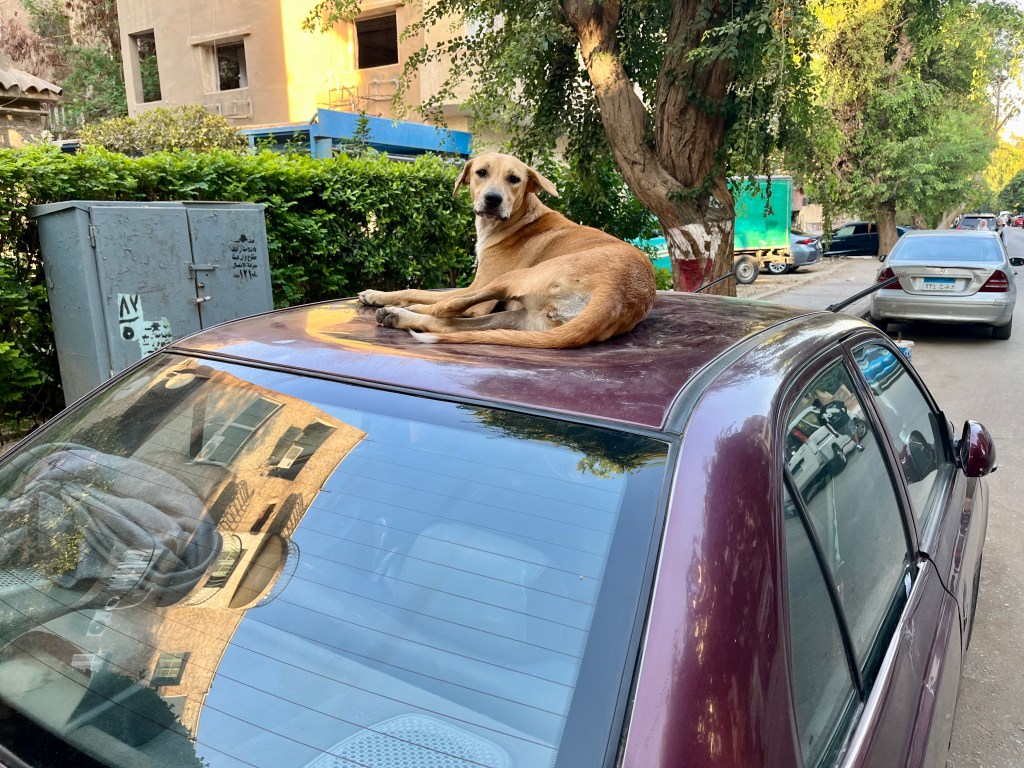
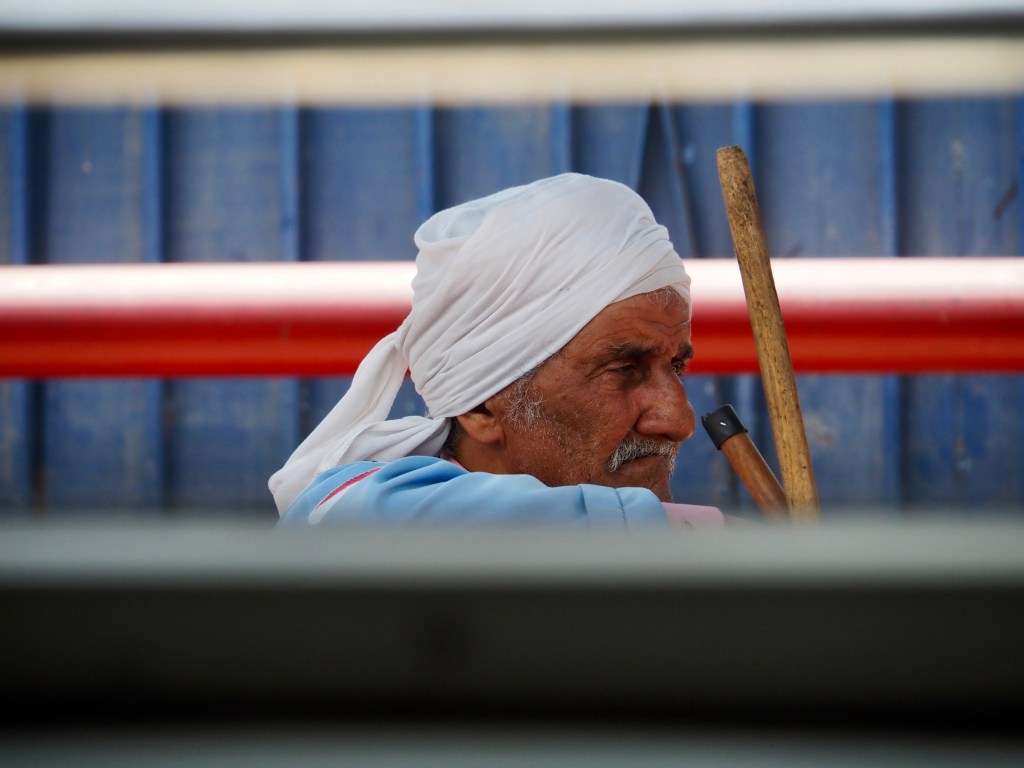
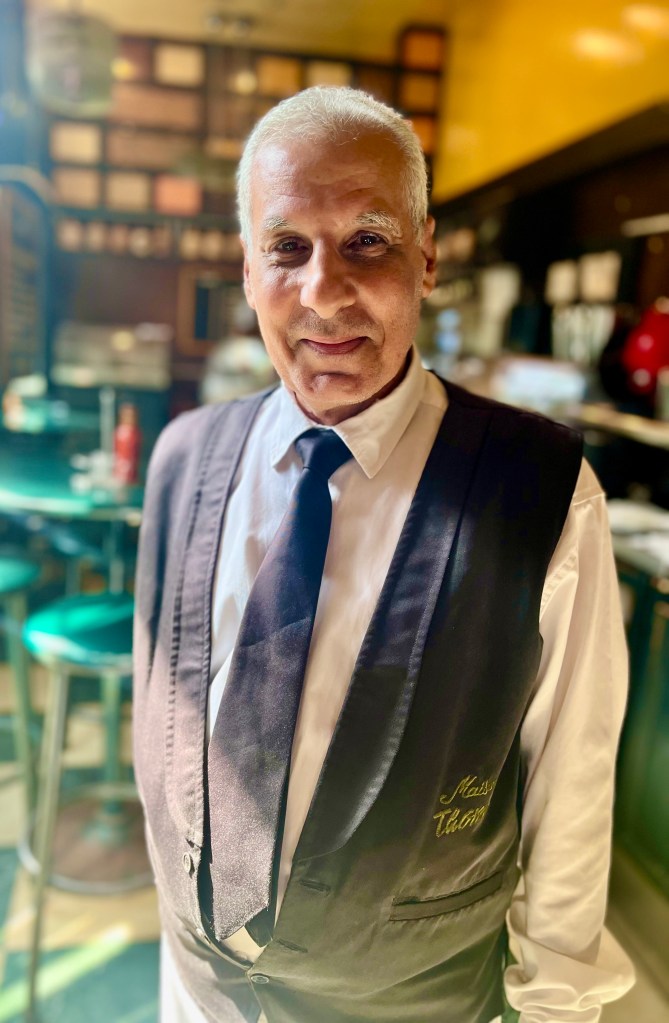
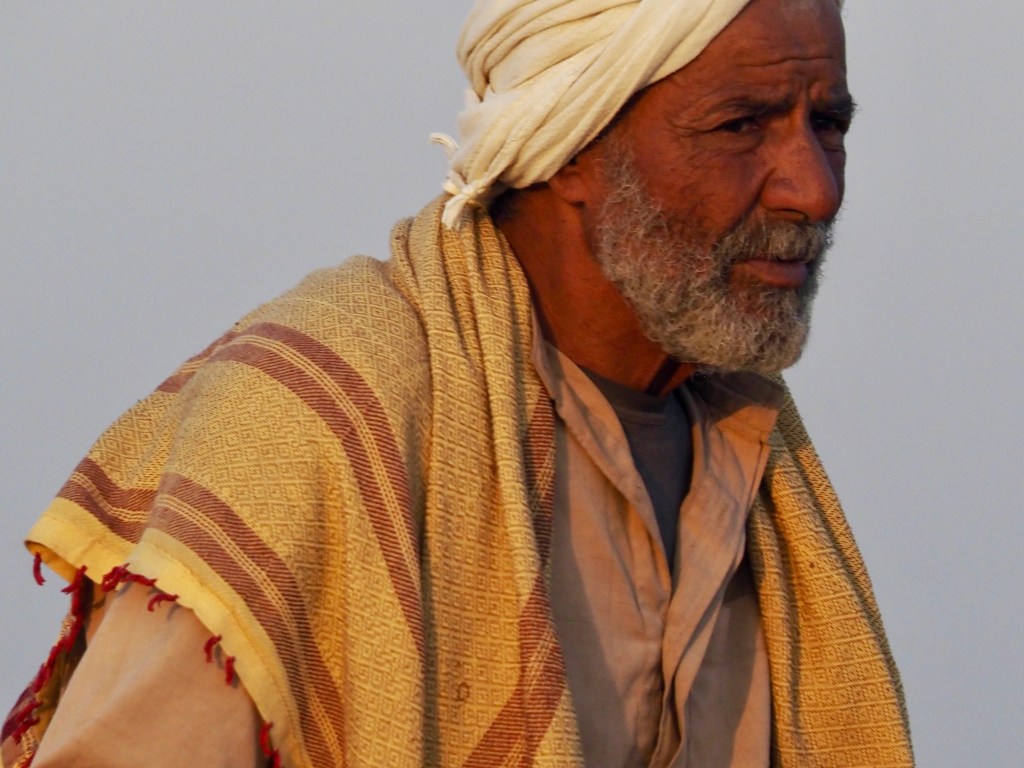
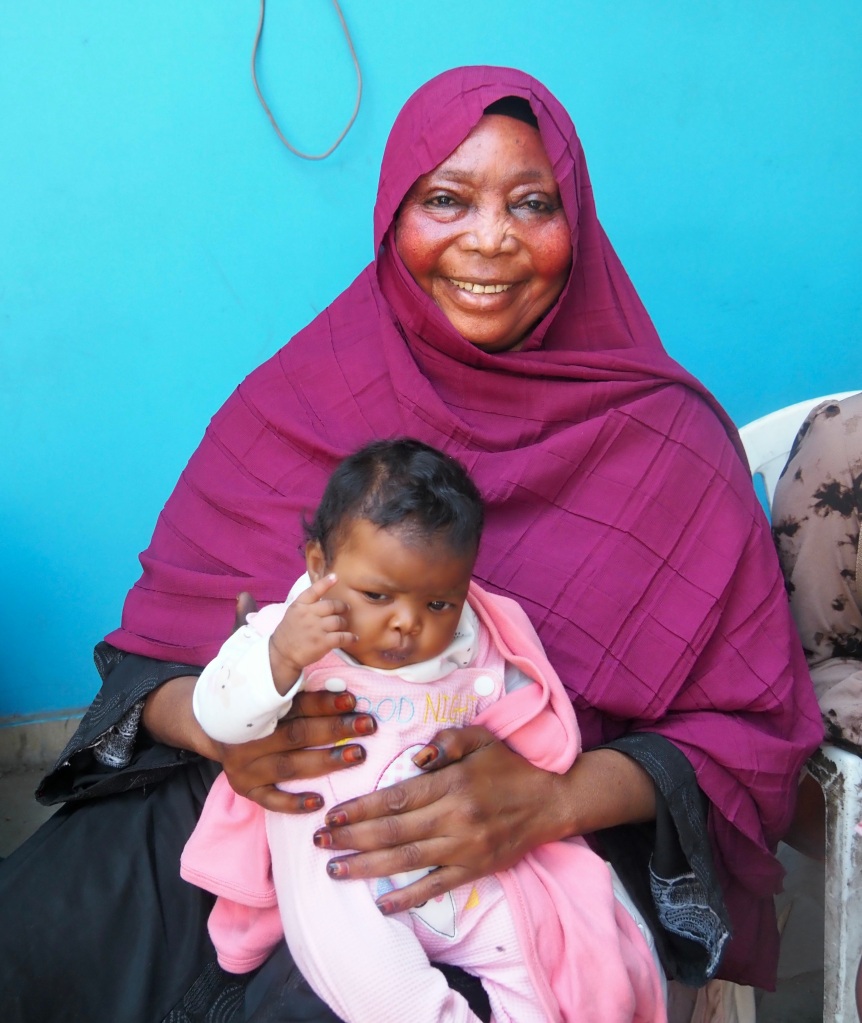
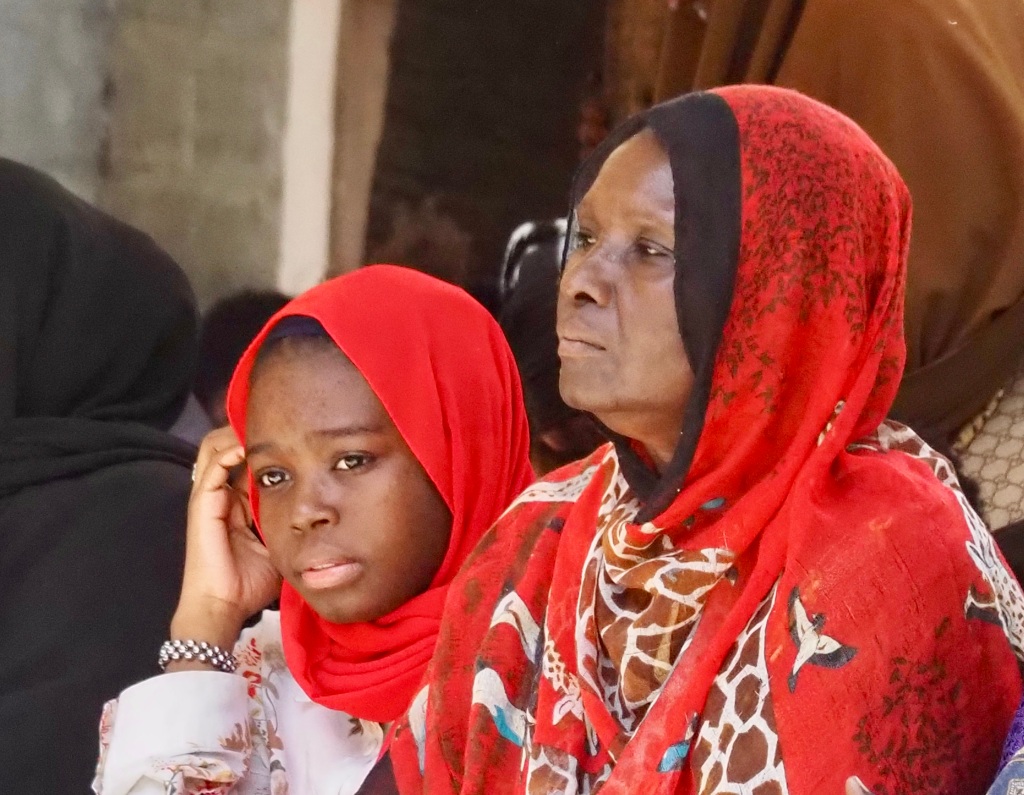
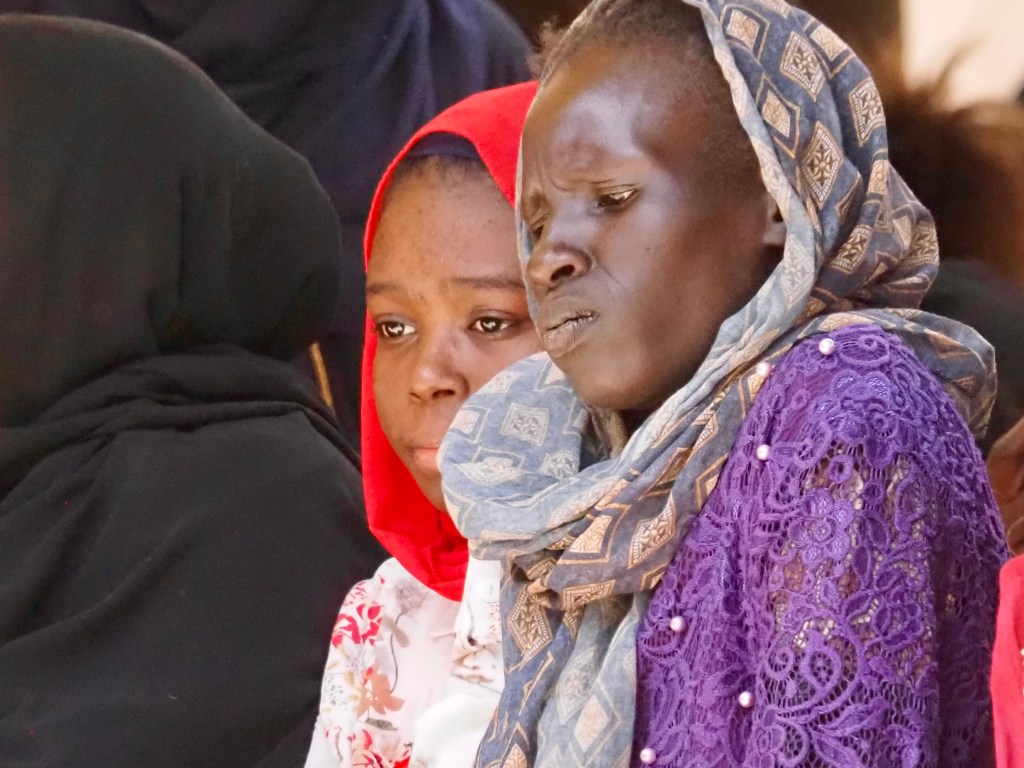
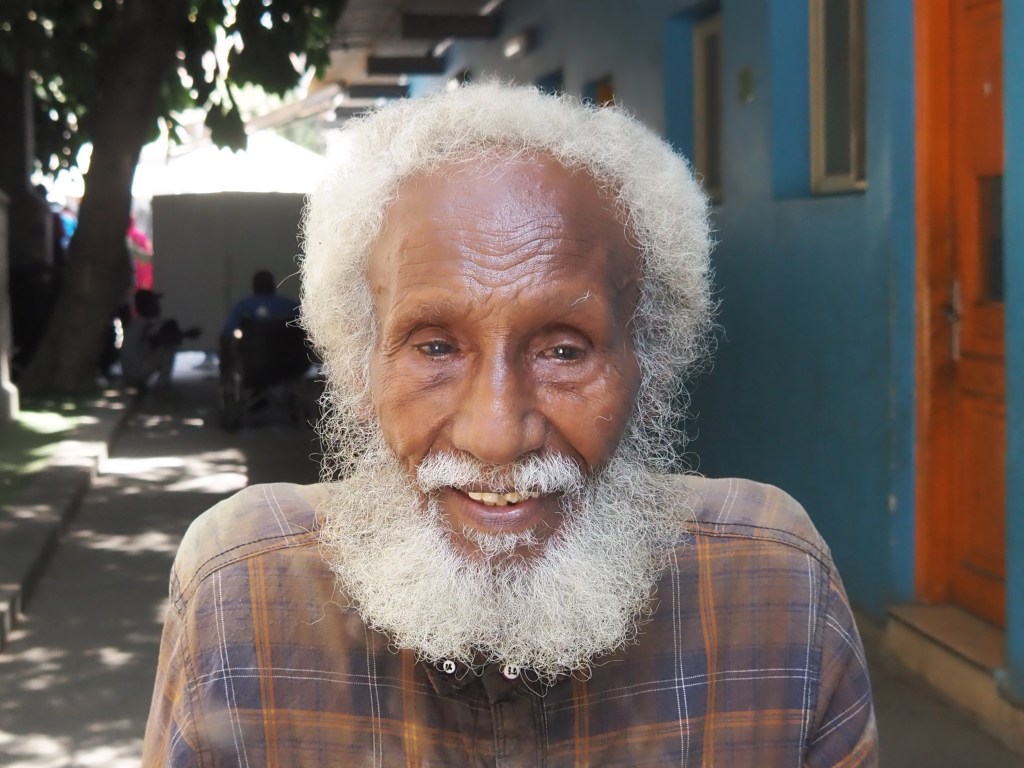
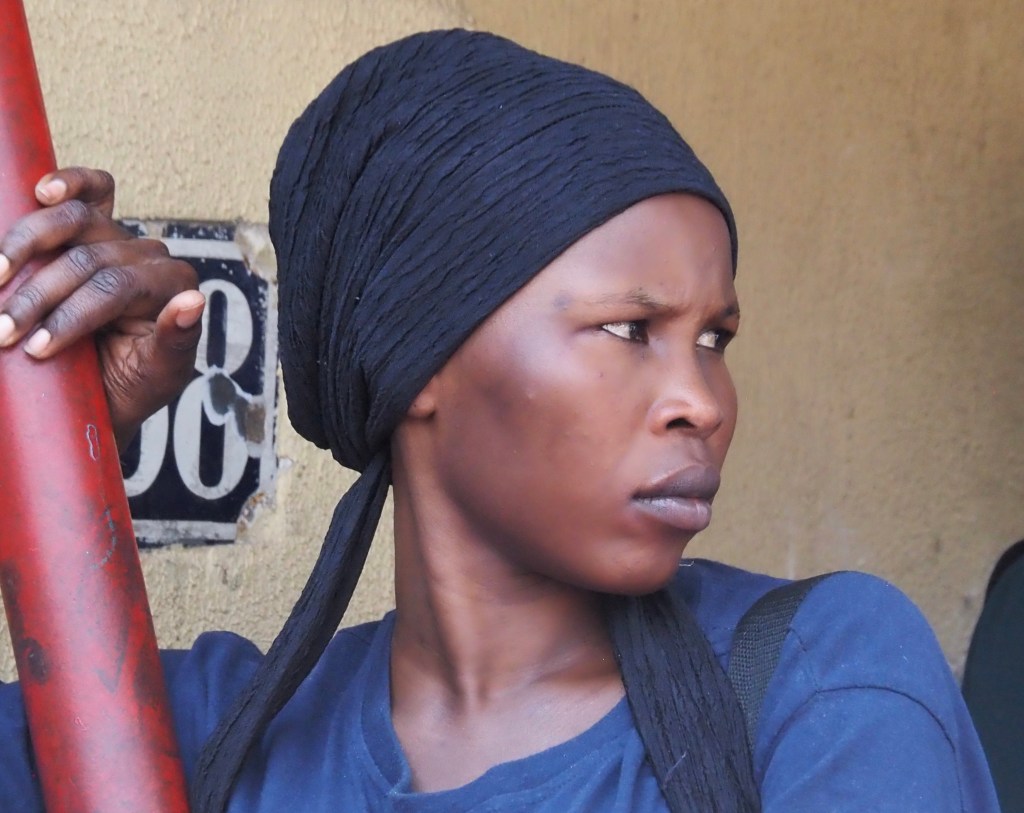
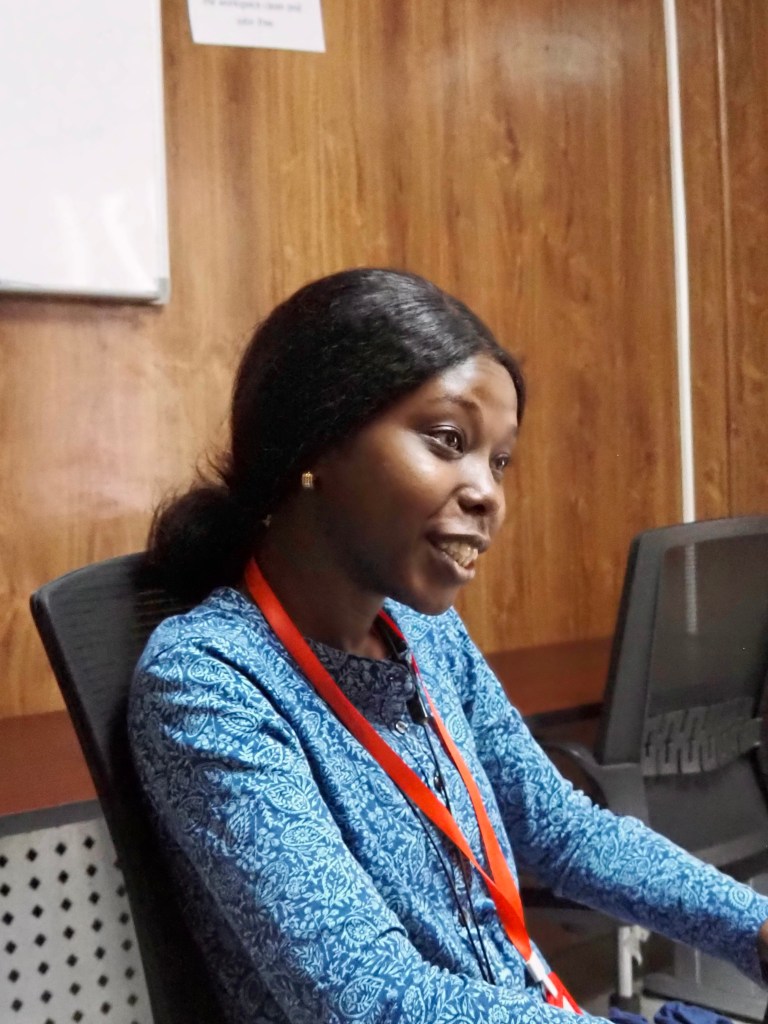
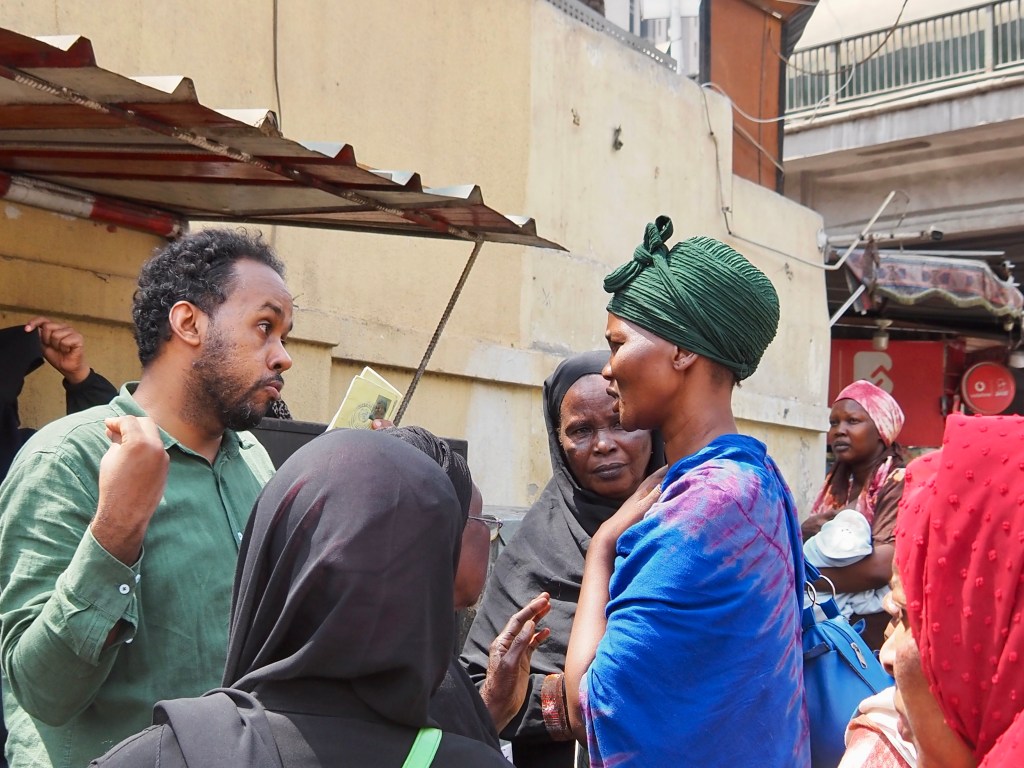
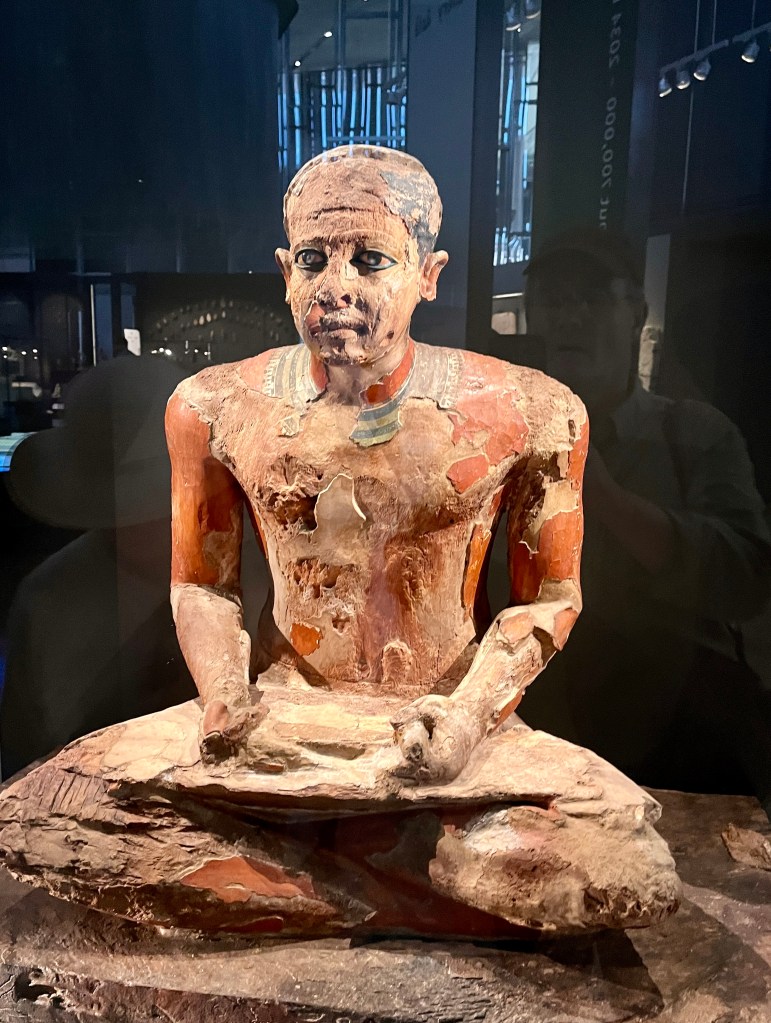
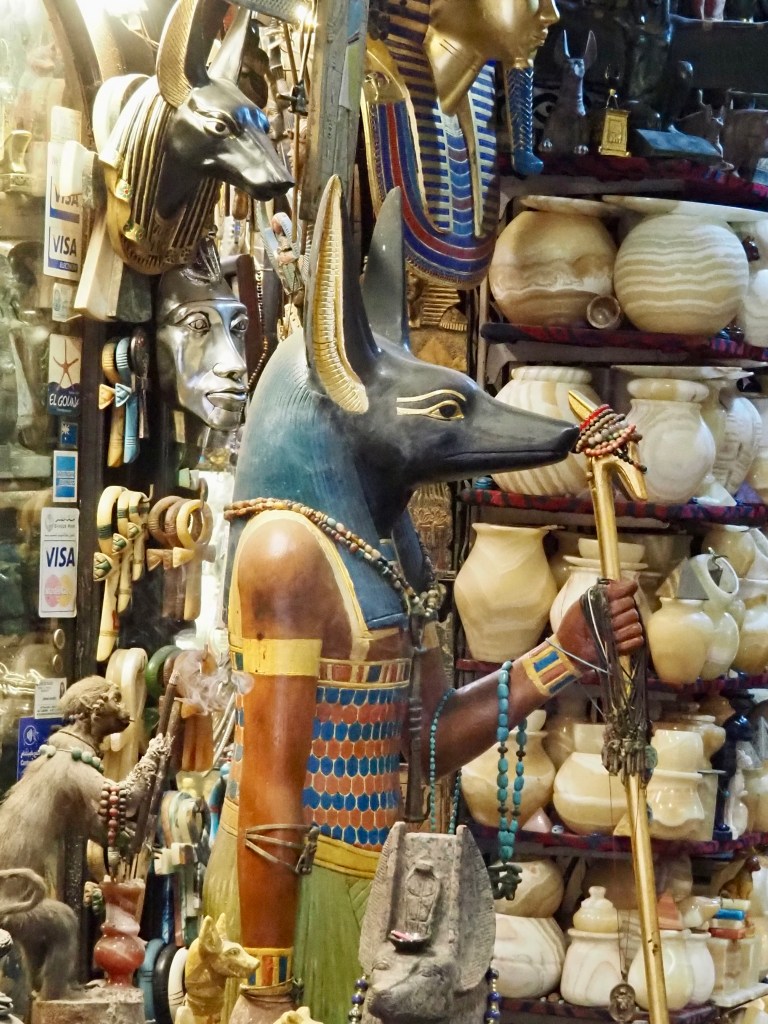
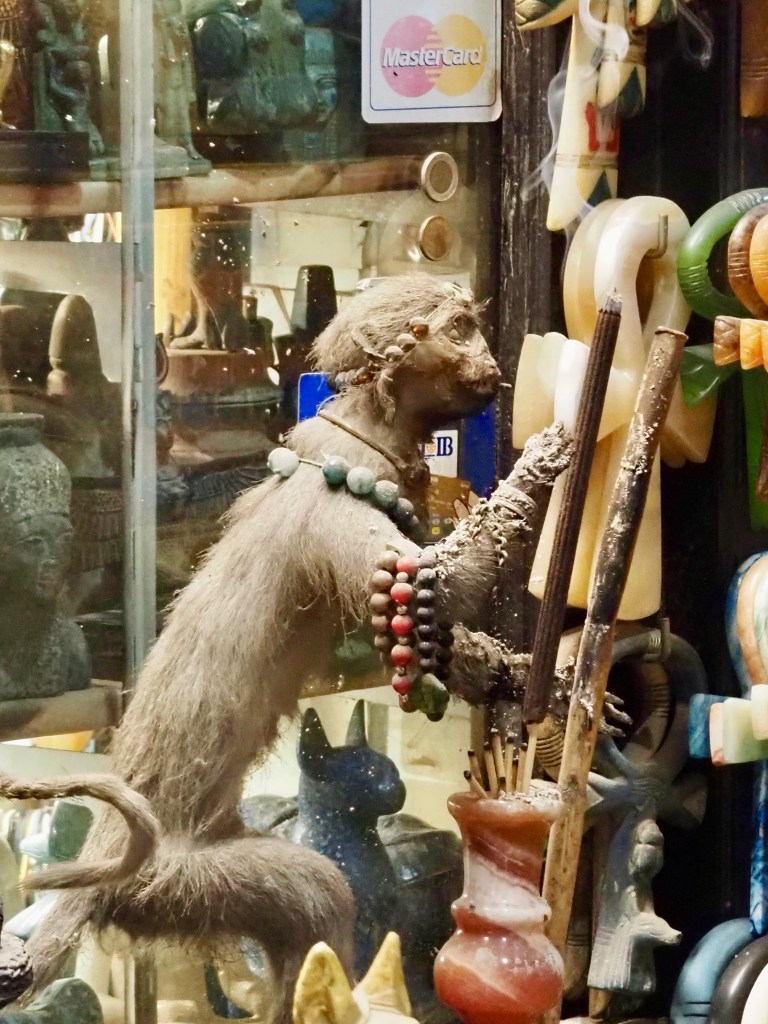
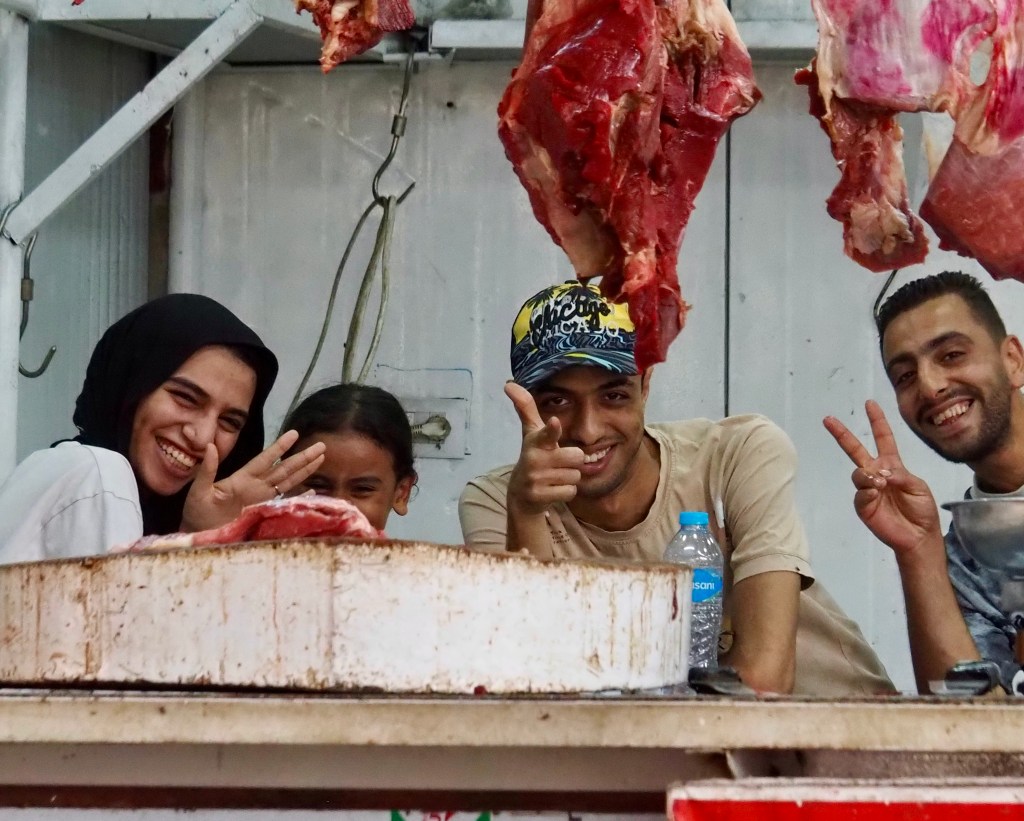
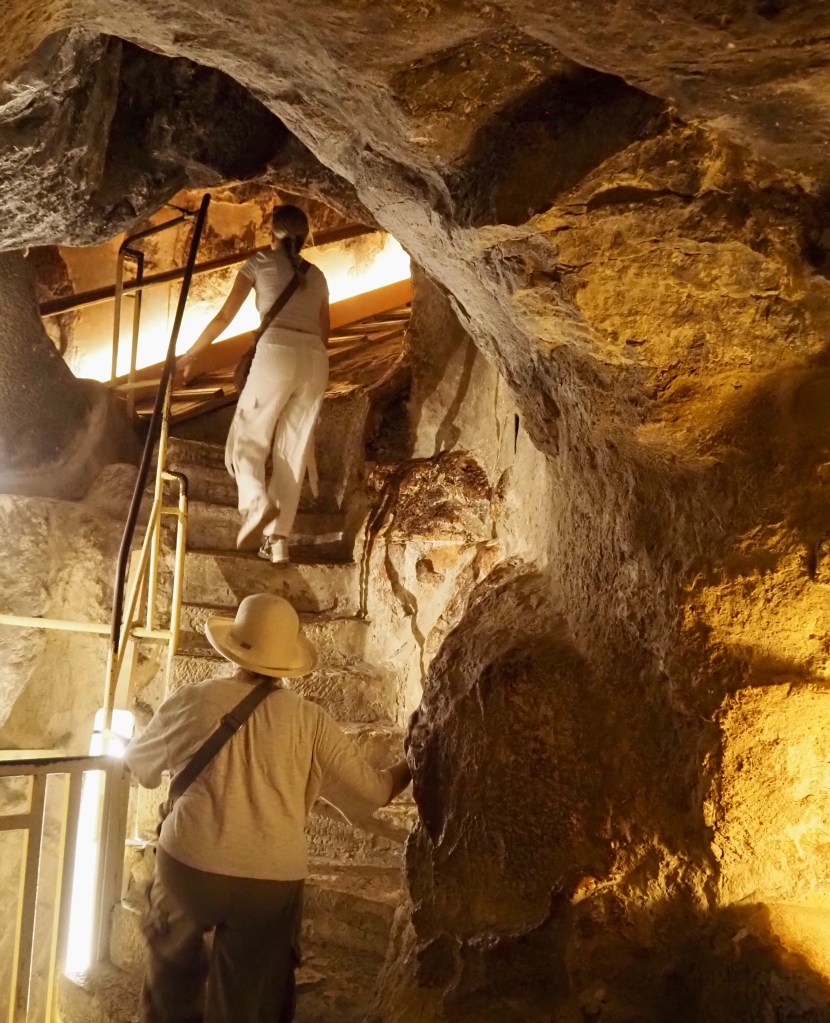
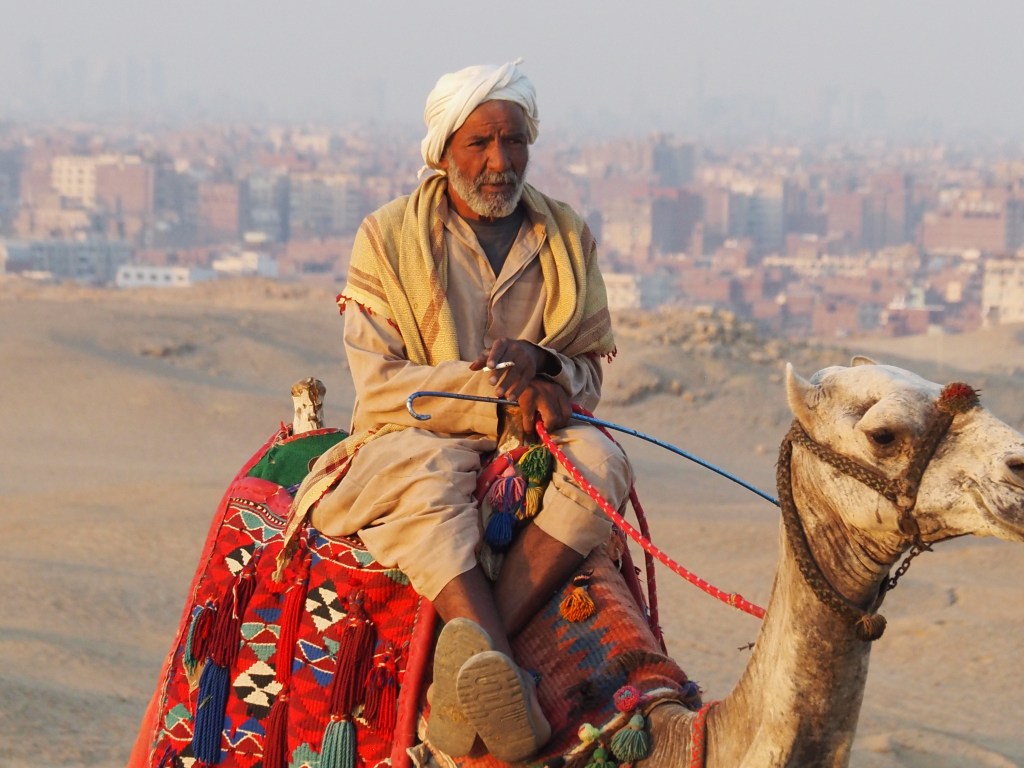
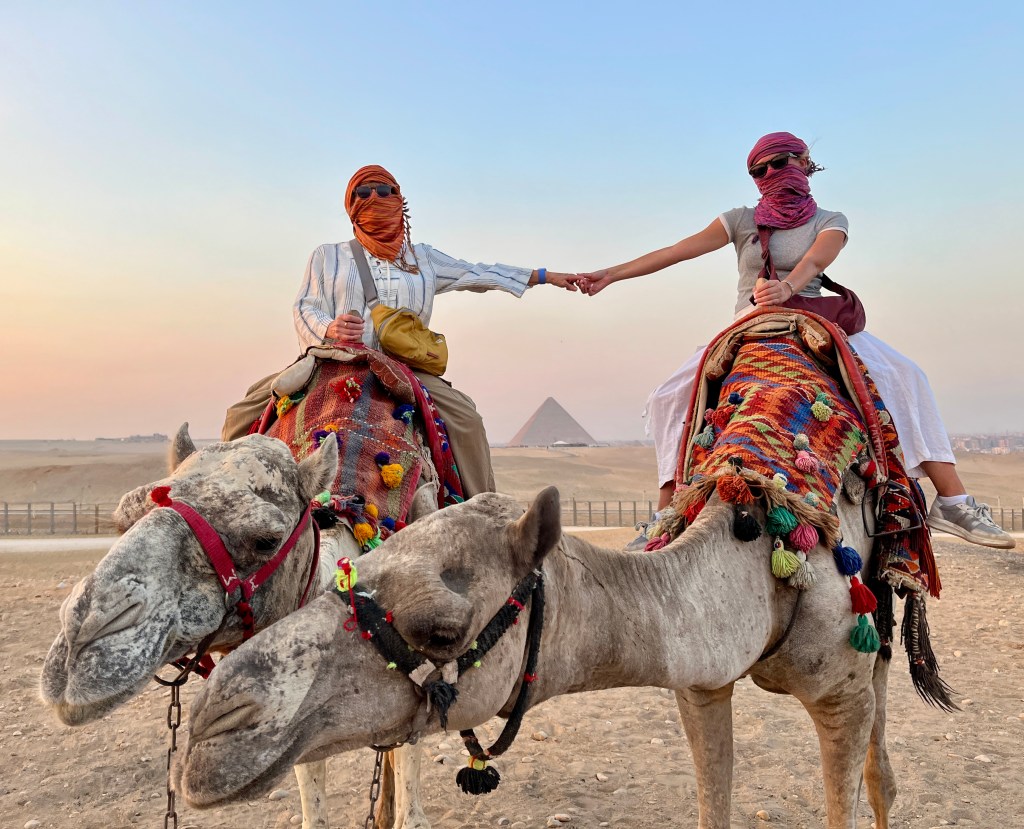
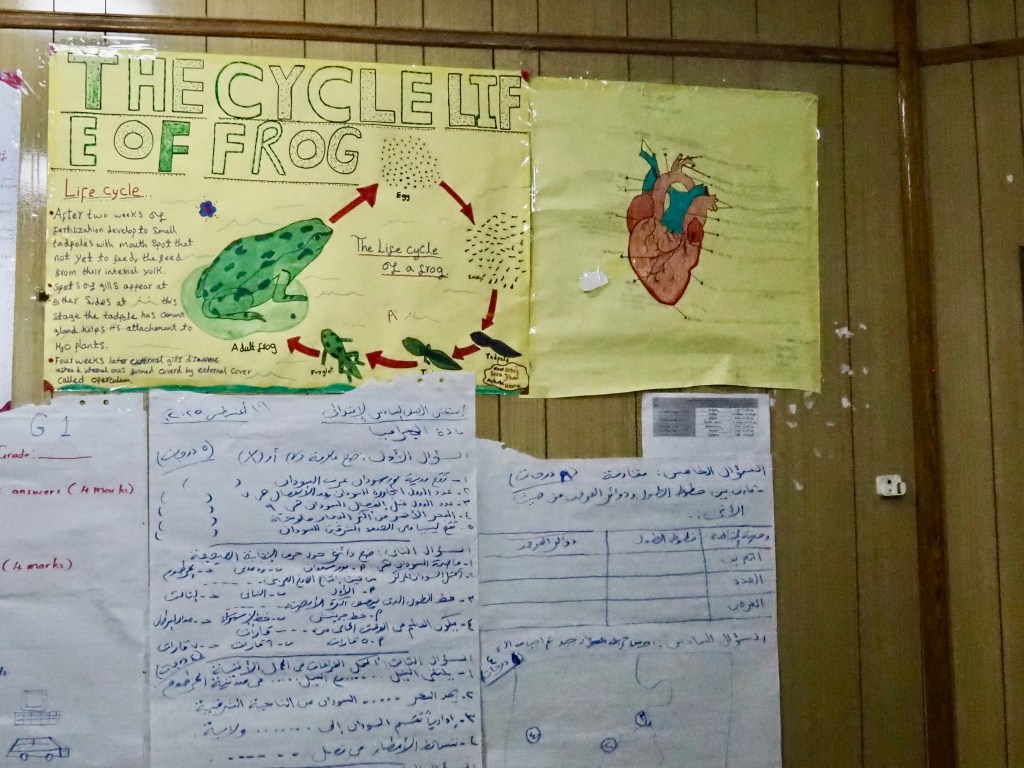
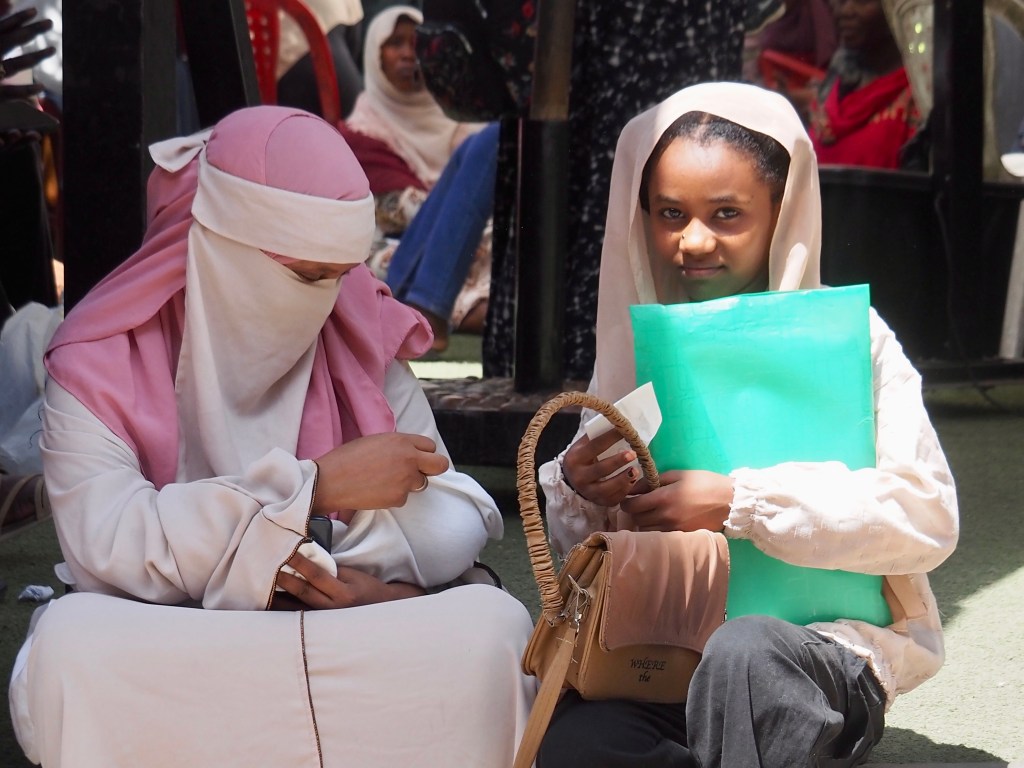
Last of all, our days in Cairo were full of so many, many faces: Egyptian faces, Sudanese faces, pet and animal faces; young and old at work, waiting or worshiping; faces of joy, of pain, of life being lived. Here are some photos of just a few of them:
Our time in Egypt is winding down. Before we return home, I want to tell you again about two people who embody the ministry of St. Andrew’s refugee ministry (STars).
The first is Nivella (pictured below) . She came to Egypt from Sudan 25 years ago with her family. In the early 2,000’s, there was an opportunity to emigrate. Instead, she gave her spot to her brother and has been here in Cairo ever since, taking care of her mother and some of her other family members. And, like many of the 600+ staff members of who received assistance when they arrived in Cairo, Nivella has found her calling by assisting other refugees. She is now the Director of the Learning Center at the STars Maadi campus.
“What is your dream?” I asked her. “To open an orphanage.” “Why an orphanage?” “Being an orphan doesn’t mean life is over,” she answered. “Life is not having a mother and father. It’s having people who care about you and love you.”
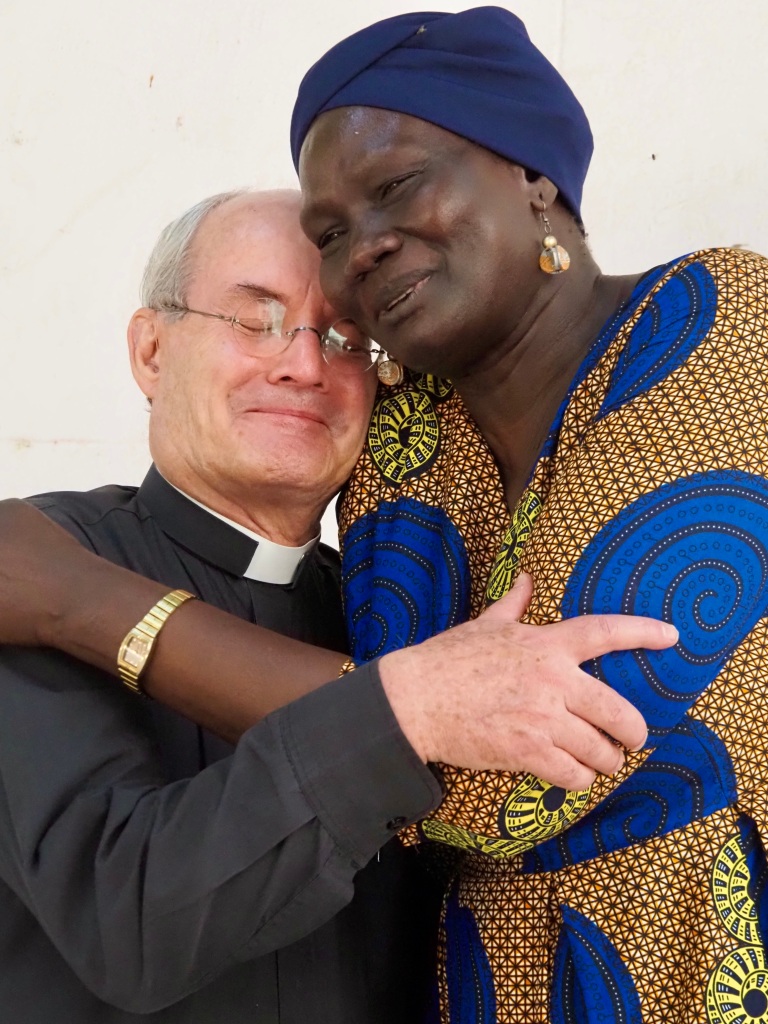
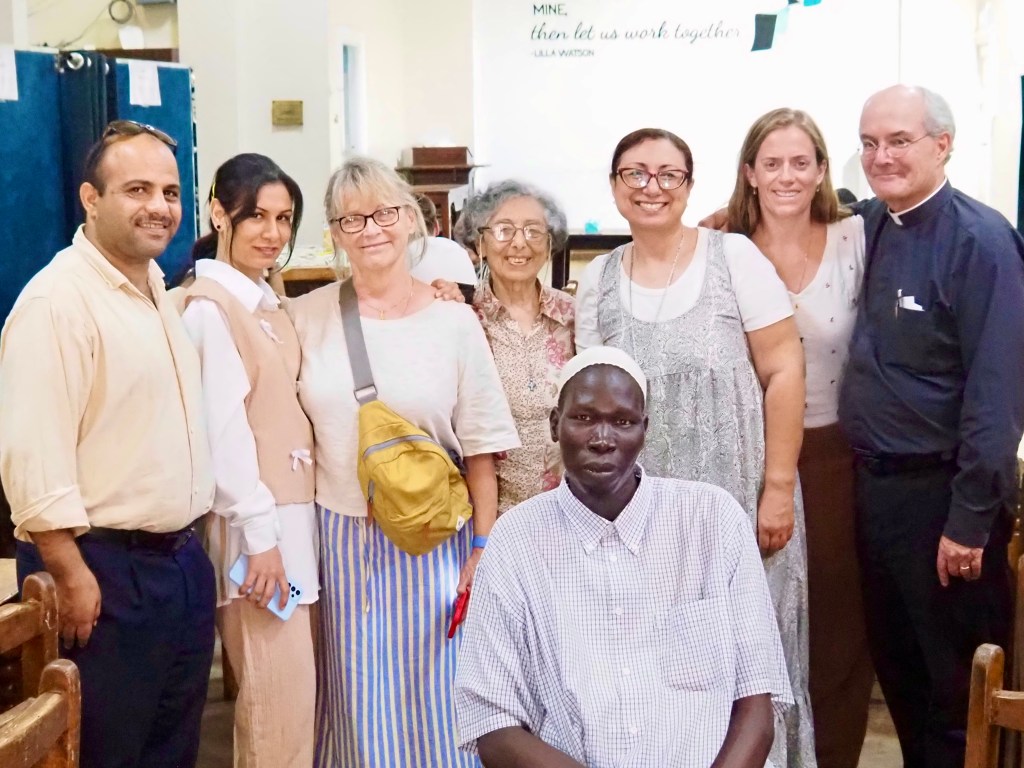
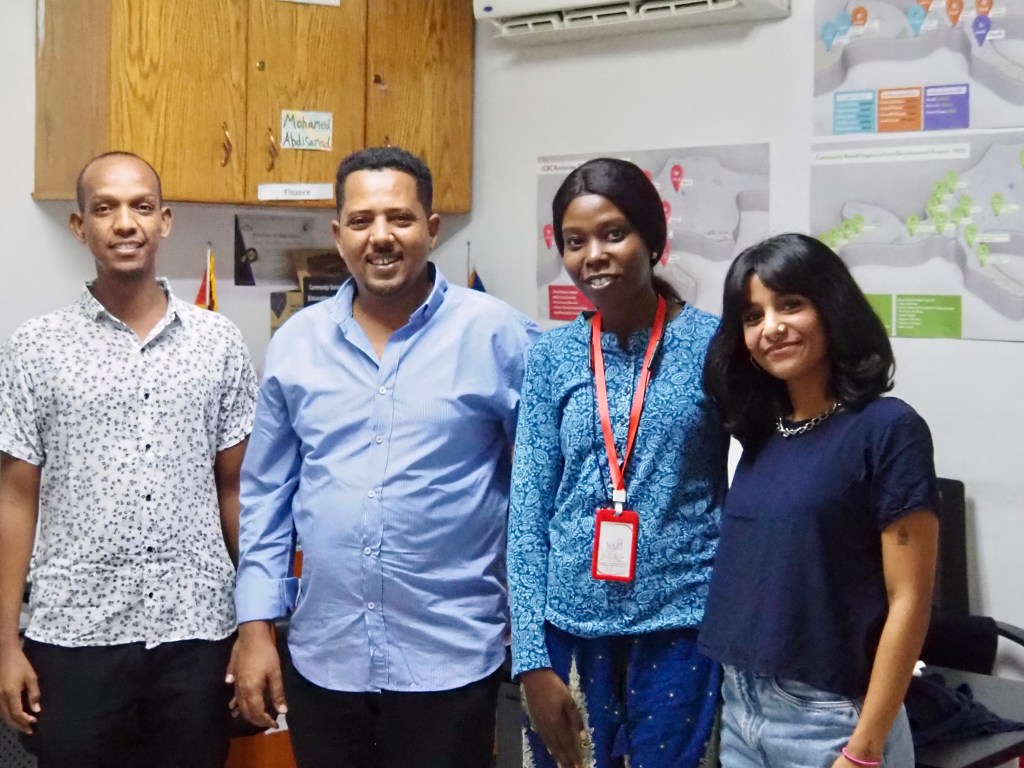
The second is Gatdaet (pictured with his mother, Angelina, and us). We first met him in 2003. He, along with his mother, Angelina and his siblings fled Sudan and they have been in Cairo ever since. Gatdaet learned English from TV and magazines. He is now a project manager from STars and would like to return to Sudan and work to restore the country.
One day Gatdaet asked me: “Would you like some tea?” I said, “No thank you.” (It was 97 degrees outside!) The next day, he made the same offer and, again, I said, “No thank you.” Gatdaet leaned over us–all 6 foot 7 of him–and said to me: “You are refusing my opportunity to give you a blessing.” How could we say “no” now? “Green tea it is.”
There is also a sad and frustrating aspect of Gatdaet’s life. He received a full scholarship to attend a college in Nebraska and was scheduled and ready to begin school this fall. However, last December his application was stalled and his future education is uncertain. What is certain is his determination to return to Sudan and help to rebuild the country.
In our last conversation with Gatdaet yesterday, he was so appreciative of St. Andrew’s and STars. He said: “The church is a great shadow, an umbrella for us at STars. We thank God for the church.”
In 2003, when Marcie and I were first in Cairo at St. Andrew’s and working with refugees arriving from Sudan or Ethiopia or Darfur, we had reasonable hope that it would be only a matter of time before they would be able to move on to safer lives in countries such as Canada, Australia, and the United States. That is no longer the case. There are some 2 million registered and an estimated 4-5 million unregistered refugees in Egypt–and the numbers are increasing. Last year, over 100,000 families sought the services of St. Andrew’s Refugee Services (STars). Most remain in Egypt; many for now over 30 years.
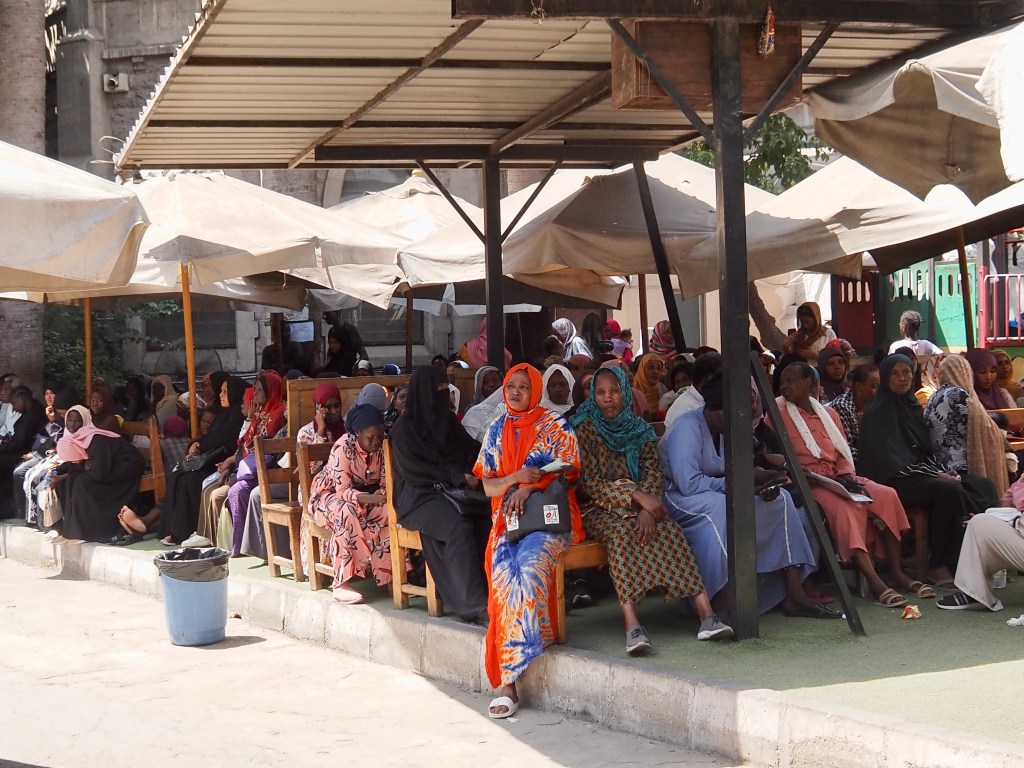
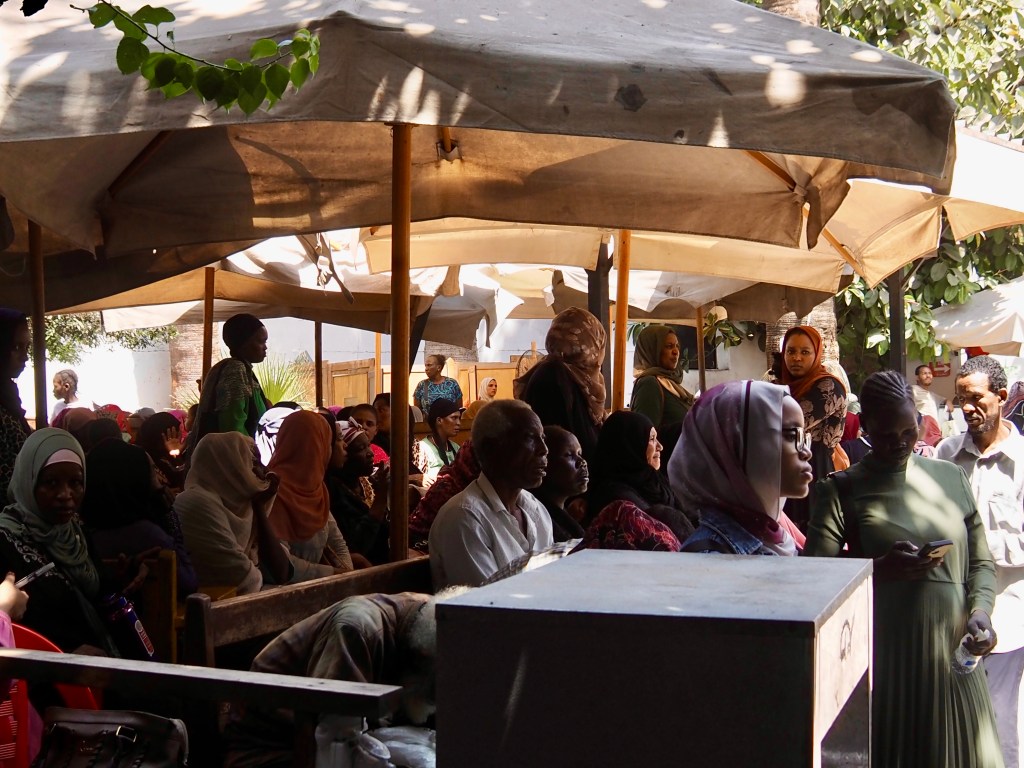
Five days a week, 150-200 new people fleeing unlivable situations arrive at the gates of St. Andrew’s. Some come with emergencies of one sort or another. Some have called a hotline and made assessment appointments and are in need of medical, legal, and housing assistance (last week one person was living with 24 others in an apartment with 3 bedrooms and 1 bathroom). Some come without appointments and have to wait; some understand and some don’t (see below).
Most are seeking refugee status from the United Nations High Commissioner for Refugees (UNHCR), who is mandated to aid and protect refugees, forcibly displaced and communities, and stateless people, and to assist in their voluntary repatriation, local integration or resettlement to a third country. Others are seeking residency papers from Egypt and that wait can be up to a year and a half.
However, whether it’s refugees status with the UNHCR and/or residency papers in Egypt, those fleeing untenable situations get no assistance and little protection from authorities. To add insult to the great injury, many so-called “refugees” hold jobs, pay for housing, make their own way without any outside assistance, and contribute as they can to their communities. They are urban exiles, far away from their homes.
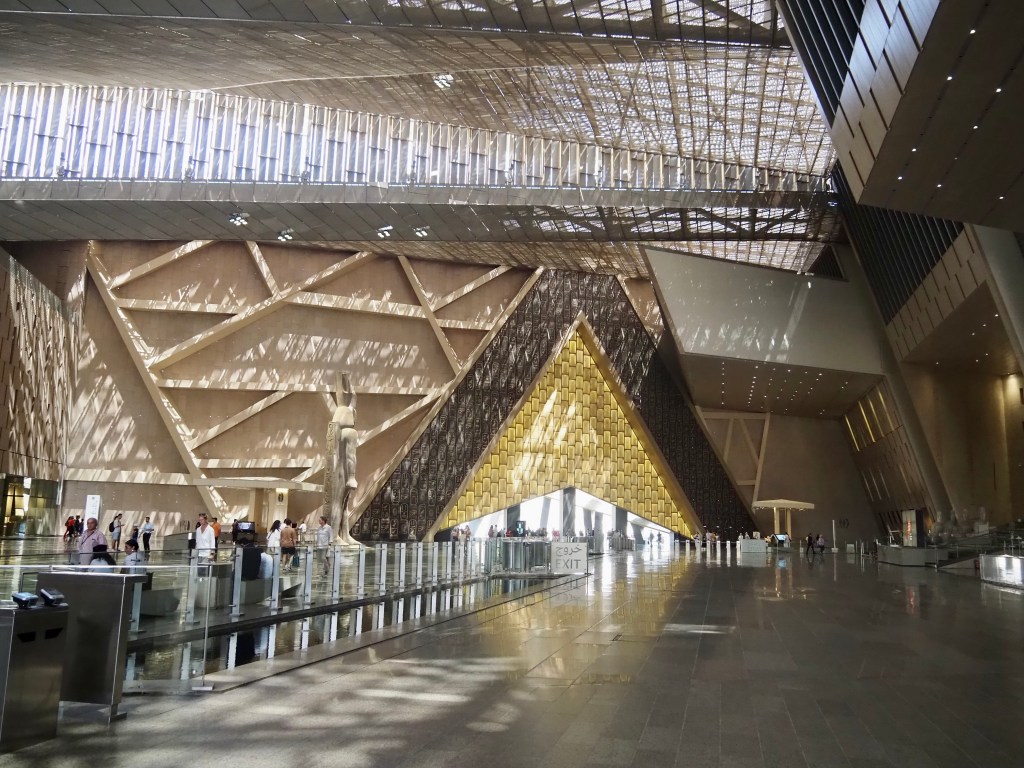
One of the big events to come in Cairo is the official opening of the Grand Egyptian Museum (GEM). It’s been a long time in the making. The museum was announced in 1992, construction began in 2005, and will be fully completed by its official opening near the pyramids of Giza on November 1st. Together with the old Egyptian museum in downtown Cairo, it will have one of the greatest collections of ancient artifacts and GEM itself will be the largest museum in the world dedicated to a single civilization. We have gone to the museum twice and, despite the absence still of the 5,000 items of the King Tut collection (including the stunning gold mask!), it is a beautiful, beautiful museum.
Today we made a trip to the big Cairo market, the Khan Khalili. It’s basically a medieval mall (it began in the 14th century) with lanes and lanes of shops over blocks and blocks of what is called, “Old Cairo.” Almost anything can be bought at the Khan; from gold to spices to kitsch to wardrobes, with all sorts of oddities thrown in. And if one seller doesn’t have what you’re looking for, they’ll find somebody who does.
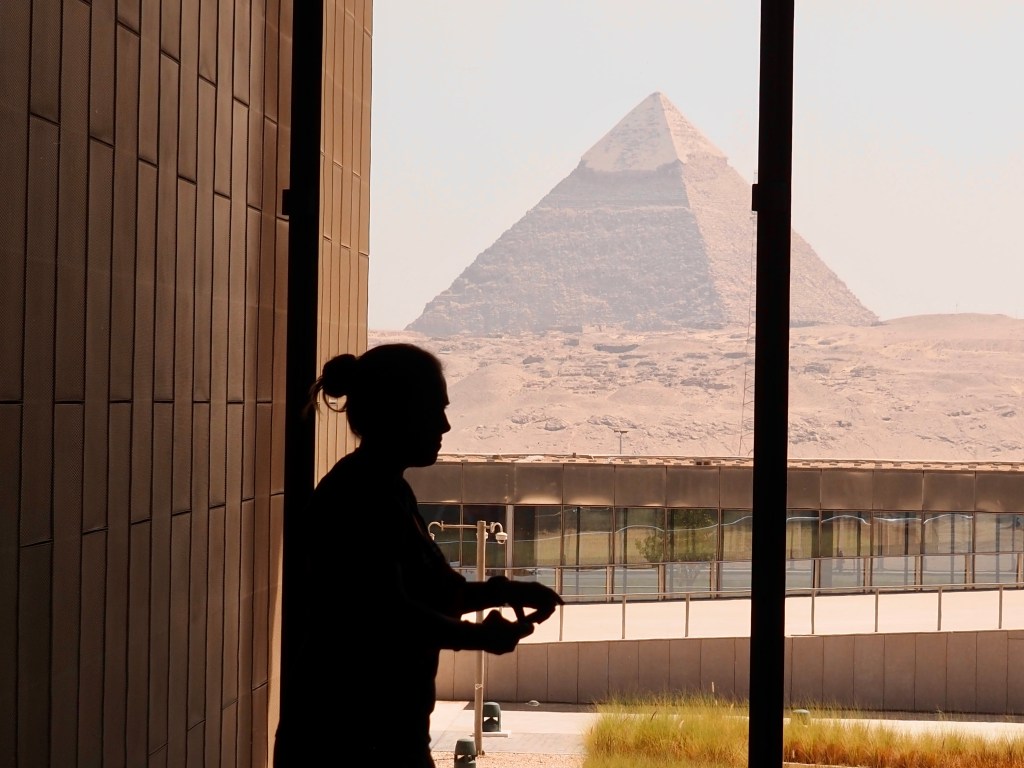
Everyone who comes to Egypt needs to take in the pyramids of Giza; the great pyramid of the pharaoh, Cheops, and the two pyramids of his sons. They are the only survivors of the seven wonders of the ancient world.
And so, a few weeks ago, we took them in with our visiting granddaughter, Julia. At first look they can seem a bit smaller than one first thought. But it doesn’t take long before you’re bowled over by them. Built over 4,000 years ago, they were once covered by smooth white limestone that shined in the sun for miles.
The pyramids are mausoleums. The pharaohs thought that you could take it with you. They spent a good part of their lives and their kingdom’s wealth building huge pyramids which served as lockers for whatever they wanted to take into the afterlife…their bodies, their treasures….. and even their favorite people (woe to their best friends!)
No one knows exactly how the pyramids were built. Archaeologists figure that 100,000 laborers spent 20 years building the largest one. Workers dragged over 2 million huge stones up ramps eventually constructing the 450-foot-high great pyramid.
Long corridors lead to the tomb chamber. Originally, these tunnels were blocked by sliding stones — to keep grave robbers out. Grave robbing must have been hard work. Long tunnels lead to the center of the pyramid. The Pharaoh’s mummy was put in a large stone tomb. The whole room was filled with treasures. Completing the whole scene is the Sphinx. It’s as old as the pyramids; carved out of a piece of hard rock.
Every day the plateau is filled with buses and tourists, camels and ATV”s and horses. The pyramids never cease to amaze!
Yesterday, Marcie and I met Nevilla, the manager of the one of the campuses of St. Andrew’s Refugee Services (STars). This location provides community outreach services and a learning center for young children, services unavailable to refugees otherwise.
Nevilla’s story is not unusual here. She came to Egypt with her family-father, mother, sister, and three brothers.. They were forced to leave South Sudan when her father, a pastor, was being pressured to convert to Islam. The family was told by a Muslim neighbor that Nevilla’s 3 year-old brother was not allowed to play with his son. He said that if he ever saw Nevilla’s brother playing with his son, he would poor hot water on him. And kids being kids, her brother went to play with his friend anyway and, when Nevilla went to get her brother, the man threw the boiling water on her instead. She showed us those scars that remain up and down her arm. After incidents such as these, Nevilla’s family fled Sudan and came to Egypt with the hope of safety and-eventually-returning to their home in Sudan.
Nevilla has now been in Egypt for 25 years. I asked her: “How do you stay strong?” “I’m a Christian,” she said. “I have faith. My time will come” “What is your dream?” “To open an orphanage.” “Why an orphanage?” “Being an orphan doesn’t mean life is over,” she answered. “Life is not having a mother and father. It’s having people who care about you and love you.”
Nevilla is a terrific staff member at St. Andrew’s Refugee Services and a remarkable person.
Today, like four other days of the week, Marcie and I came through the church gates to see 150-250 refugees waiting for assistance from St. Andrew’s Refugee Services. It was hot; another 99 degree day. Along with those in the courtyard, there are hundreds of other refugees meeting in classrooms, old shipping containers, offices, and parish hall with staff members; hoping for assistance of many kinds; food, medical, legal, and psycho-social needs.
And currently, most of the refugees are Sudanese. In Saturday’s New York Times, Nicholas Kristof reports that Sudan is “probably the site of the world’s worst humanitarian crisis today. Famine was officially declared there last year; the United Nations reports that some 25 million Sudanese face extreme hunger and at least 12 million have had to flee their homes because of civil war. Tom Perriello, who was the U.S. special envoy for Sudan until this year, tells me that he believes that the death toll by now has exceeded 400,000.” (from, Where There’s No Debate About Genocide-and No Response Either, Nicholas Kristof, New York Times, August 30, 2025).
In the midst of the great need, I am grateful for the many who have stepped up to support this ministry to the Sudanese over many years; the ELCA (Evangelical Lutheran Church in America), together with organizations and congregations throughout the world, including my most recent call, Peace Lutheran Church in Bloomington, Minnesota.
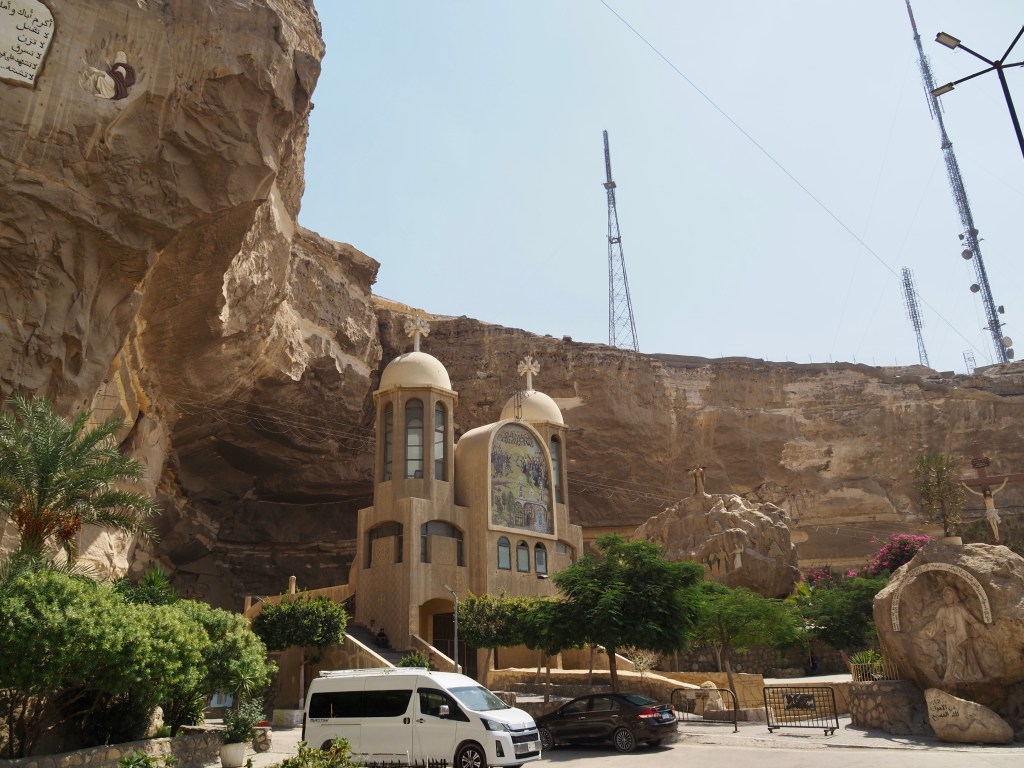
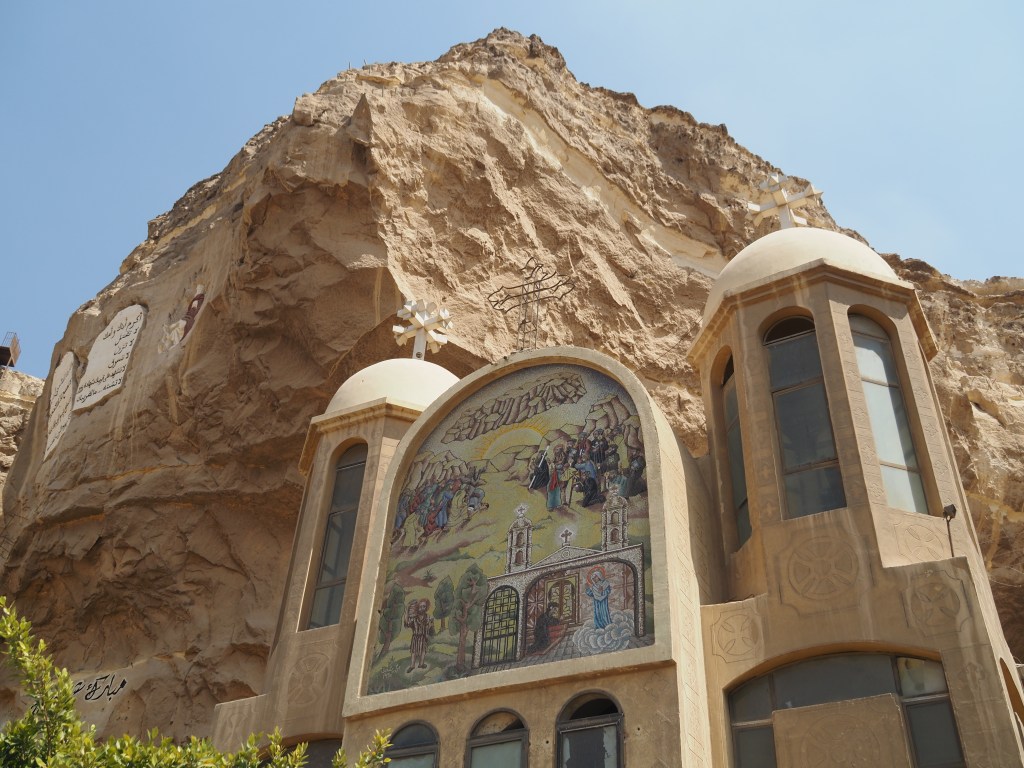
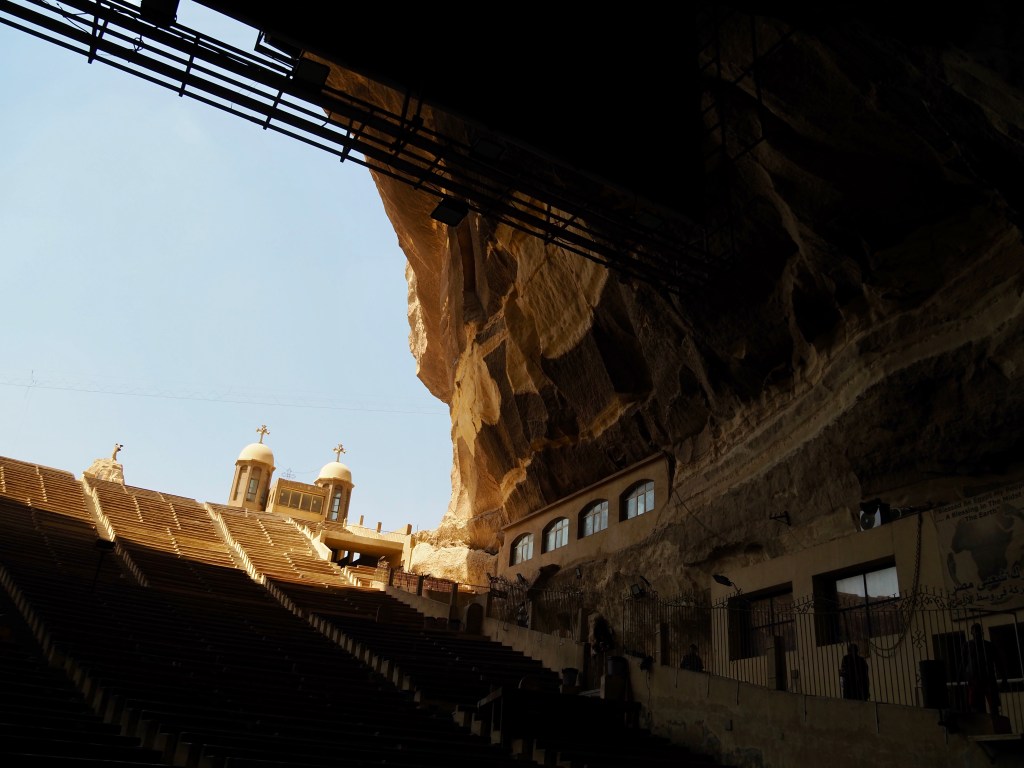
On the edge above Garbage City is the church for the zabbalin and other Coptic Christians, the Church of St. Simeon the Tanner. It was built in the 1970’s into a large cave on the ridge of the Mogattam Hills. The church is thought to be the largest church in the Middle East, seating between 15,000 and 17,000 worshipers. There are carvings in the cliff walls depicting Biblical scenes and, much to our surprise, a zip line on the church grounds. But this church, in this setting……is stunning.
Looking around Cairo, you might think that garbage is never picked up–but it is, by 65,000 people of the Coptic Christian Zareeb community, known as the zabbalin, the “garbage people.” The Zabbilin are descended from farmers who migrated to Cairo from Northern Egypt in the 1940s. They settled in camps on the city’s outskirts and began collecting waste to earn a living. Currently this community makes a living by collecting garbage from Cairo neighborhoods and then sorting and recycling while feeding the organic waste to the pigs. They manage to recycle about 80% of the waste they collect.
In spite of their efficiency, back in 2004 the government recruited multinational companies and threatening the livelihood of this community. It was a huge failure! The zabbalin did the job better! The government adjusted its policies and officially reinstated about 60 Zareeb communities who took charge of waste disposal in many parts of the city.
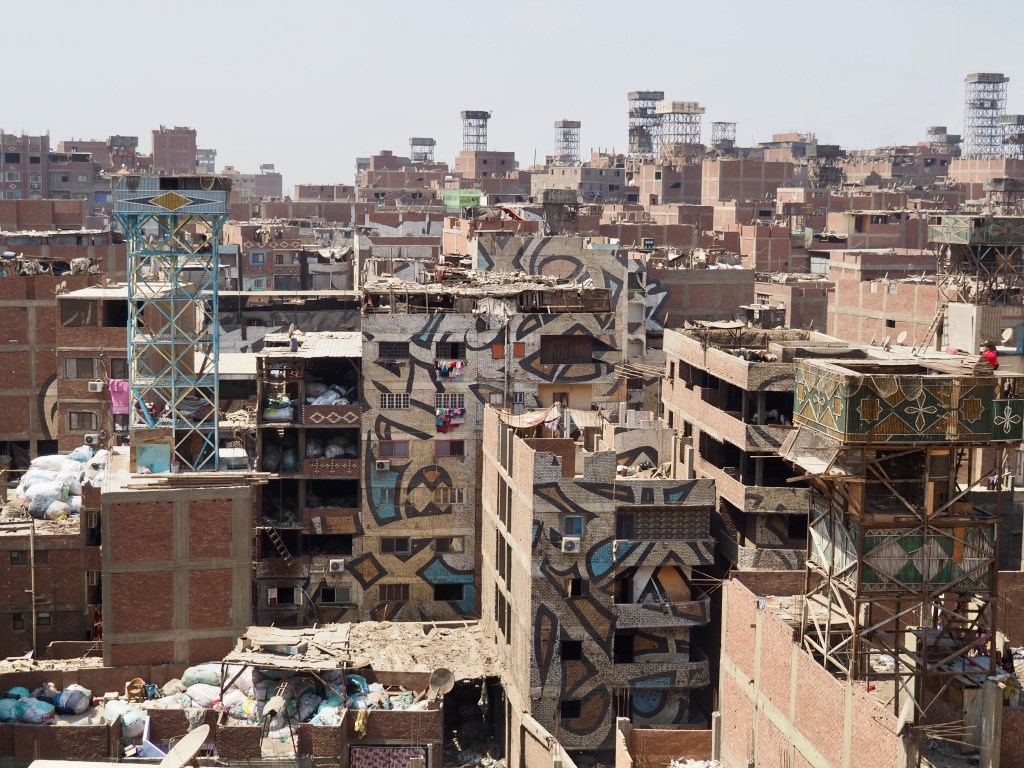
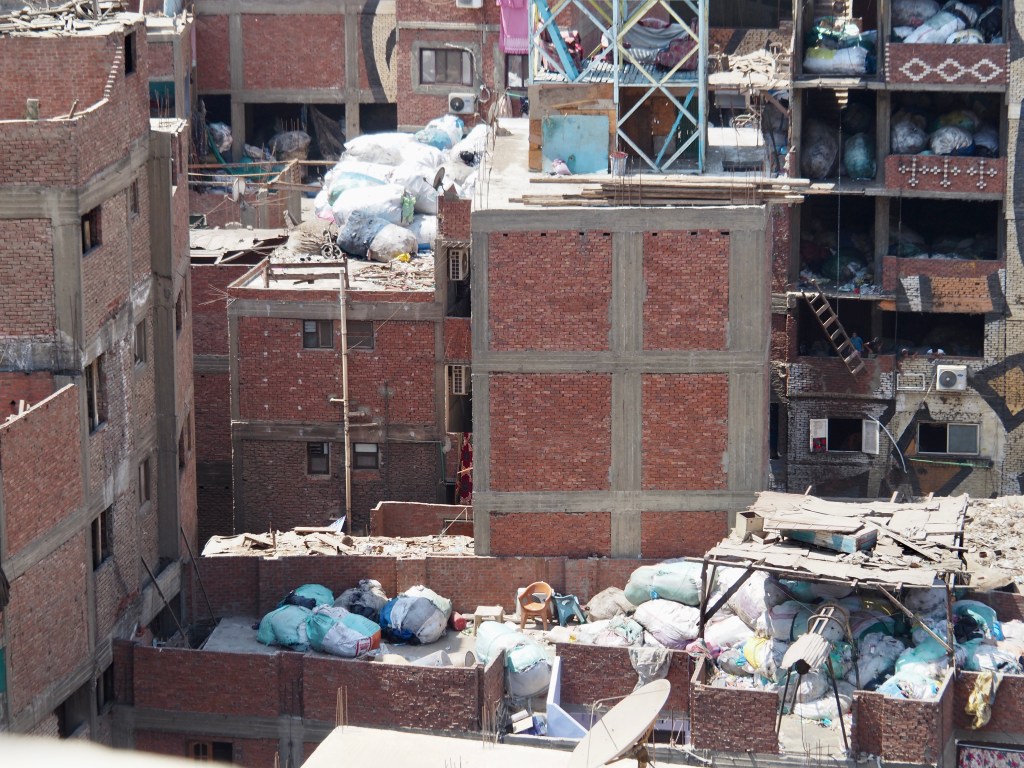
This community lives in a district known as “Garbage City” at the base of the eastern edge of the Nile river valley, the Moqattam Hills. It’s a very densely populated area and it’s also where the garbage gets sorted, with apartment block roofs piled high in various stages of recycling and huge bags of garbage on roofs waiting to be sifted. (Note the pigs grazing on the rooftops!) Also, Garbage City is home to an amazing site. See Part 2!






























 Mark Nelson's Blog